


Table of Contents
Why Choose a Kyoto Kimono Rental
Walking through the narrow stone-paved lanes of Kiyomizu-dera and Gion in a kimono is one of the most magical experiences Kyoto has to offer. The rustle of silk, the click of wooden geta sandals on cobblestone, and the way the late afternoon light catches the fabric — it's the closest you can get to stepping back into Japan's imperial past.
But with dozens of Kyoto kimono rental shops to choose from, wildly different price points, and the logistics of dressing, walking, and photographing — it can feel overwhelming. This guide covers everything: where to rent, what to expect, how much to budget, and the best photo routes through Kyoto's most photogenic districts.
Kyoto is the kimono city. Unlike Tokyo or Osaka, where traditional dress feels out of place among skyscrapers, Kyoto's preserved historic districts — with their wooden machiya townhouses, vermillion torii gates, and centuries-old temples — were quite literally built for kimono. According to the Kyoto Kimono Rental Association, the number of rental shops has tripled since 2019, and over 3 million posts have been tagged #京都着物 on social media.
Best Areas for Kimono Strolling in Kyoto
Not all Kyoto neighborhoods are equally suited for kimono walking. Some are too crowded, others too modern. These are the three areas where a kimono rental Kyoto experience truly shines:
1. Kiyomizu-dera & Sannenzaka / Ninenzaka
This is the postcard image of Kyoto. The preserved slopes of Sannenzaka and Ninenzaka — with their traditional sweet shops, tea houses, and pottery stores — frame the approach to Kiyomizu-dera Temple. The wooden balcony of the temple offers a panoramic view of Kyoto that's especially stunning at sunset. Renting a kimono near Kiyomizu-dera means you step out of the shop and are immediately in the most photogenic part of the city. View our rental plans →
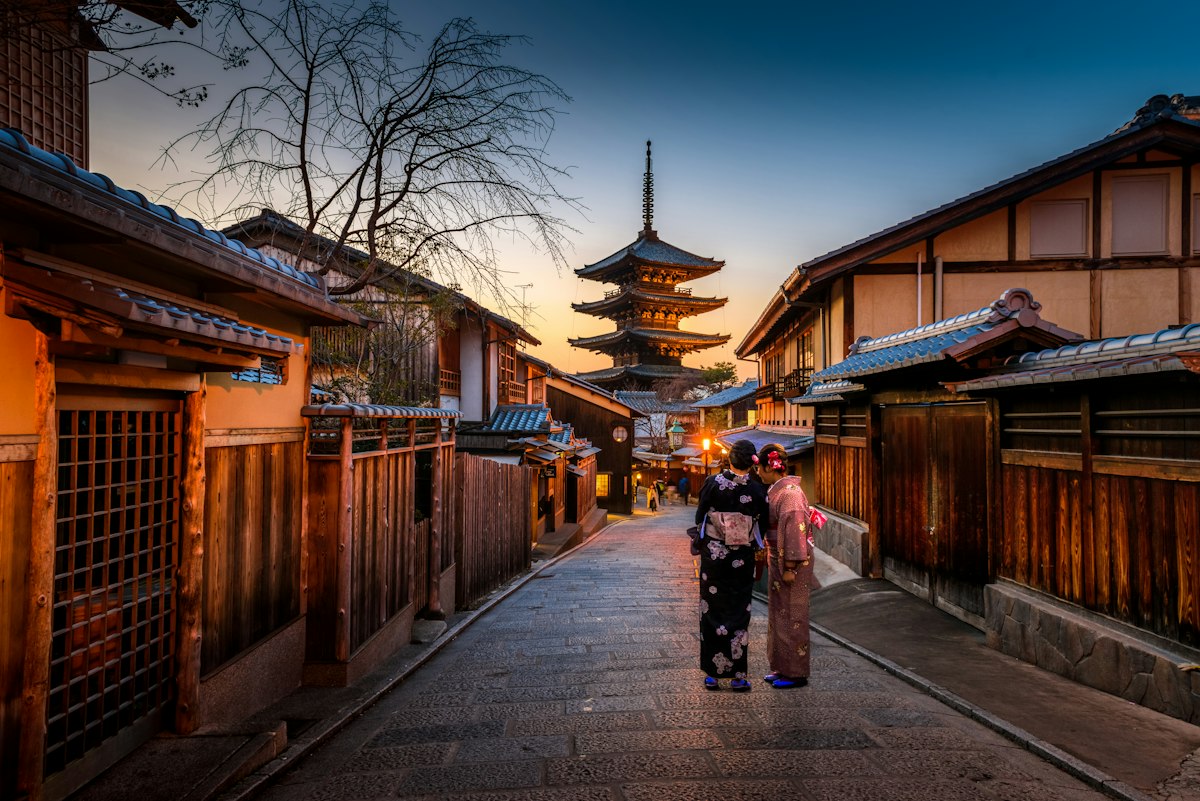
Photo by Sorasak on Unsplash
2. Gion & Hanamikoji
Gion is Kyoto's most famous geisha district, and Hanamikoji Street is its beating heart. The narrow lane lined with ochaya (traditional tea houses) is particularly atmospheric in the early morning or at dusk, when lanterns begin to glow. A kimono rental near Gion puts you within walking distance of Yasaka Shrine, Maruyama Park, and the Shirakawa canal — all exceptional photo backdrops.
3. Arashiyama Bamboo Grove
For a completely different aesthetic, the towering bamboo stalks of Arashiyama create a surreal green tunnel that contrasts beautifully with colorful kimono fabric. The combination of natural grandeur and traditional dress is unforgettable. However, it's farther from the main kimono rental clusters, so plan for a half-day trip.
How Much Does a Kyoto Kimono Rental Cost?
All Kanwa plans are all-inclusive with transparent pricing — no hidden fees. Here are the exact 2026 plans:
| Plan | Price (JPY) | Description |
|---|---|---|
| Komon Kimono | ¥3,300 / ¥5,500 | Casual kimono with rich patterns, easy to coordinate |
| Lace Kimono | ¥6,800 | Modern style with elegant lace details |
| Summer Yukata | ¥3,300 / ¥5,000 | Light cotton kimono for summer festivals |
| Hōmongi / Tomesode | ¥12,800 | Formal kimono for special occasions |
| Furisode | ¥16,800 / ¥33,000 / ¥39,800 | Long-sleeve celebration kimono, three tiers |
| Men's Kimono | ¥5,500 / ¥8,800 | Fits heights 155–190 cm |
| Children's Kimono | ¥5,000 | Various ages and sizes available |
What's Included (All Plans)
- Kimono — your chosen style
- Obi belt — coordinated by professional staff
- Sandals (zōri) & Tabi socks
- Handbag — matching the outfit
- Basic hair styling — free with online reservation
- Hair accessories — selected to match
- Undergarment (hadajuban) — full set included
Optional Upgrades
- Deluxe hair styling — +¥1,000 (choose from a catalog of elegant styles)
- Professional makeup — +¥4,500 (by a professional makeup artist)
- Photo shoot (60 min) — +¥15,000 (professional photographer, retouched photos included)
All-Inclusive Free Extras
- Free overnight return — return the next day, no extra charge
- Free luggage storage — explore Kyoto hands-free
- Multilingual service — Japanese, English, Chinese (中文)
- Free style change — switch to any other plan at the shop
- Rain plan — complimentary clear umbrella; free reschedule in severe weather
How to Choose a Kimono Rental Shop
With so many options, here are the five factors that actually matter when picking a kimono rental shop in Kyoto:
1. Location, Location, Location
Pick a shop in the area you want to explore. A shop near Kiyomizu-dera means you walk out the door and you're already there — no bus or taxi in a restrictive kimono. Kanwa Kimono has shops both in Kiyomizu and near Yasaka Shrine (Gion), giving you direct access to Kyoto's two best kimono districts. See our locations →
2. Language Support
The dressing process involves a dozen steps and specific instructions. Shops with English and Chinese-speaking staff make the experience dramatically smoother. Don't underestimate this — a communication gap during dressing can mean a kimono that's too tight or an obi that unravels mid-walk.
3. Price Transparency
Look for shops that clearly list what's included. Some advertise ¥2,000 but charge separately for sandals (¥500), bag (¥500), hair (¥1,500), and suddenly you're at ¥4,500. All-inclusive pricing is the sign of a trustworthy shop. Kanwa's transparent plans →
4. Fabric & Pattern Selection
A shop with 50 kimonos vs. 500 kimonos is a completely different experience. More choice means better odds of finding colors and patterns that suit your skin tone and the season. Check if the shop's website or social media shows their actual selection.
5. Real Reviews
Google Maps reviews (not just the shop's own website testimonials) are your best friend. Look for comments about: dressing quality, staff patience, and whether the kimono stayed comfortable all day.
The Kimono Dressing Process: What to Expect
If you've never worn a kimono, here's the step-by-step of what actually happens during your Kyoto kimono rental:
- Arrive & Check In (5 min) — Confirm your reservation, store your belongings in a provided bag.
- Choose Your Kimono (10–20 min) — Browse the racks. Staff can suggest combinations that photograph well.
- Choose Obi & Accessories (5 min) — The obi (wide belt) is your main accent piece. Contrast or complement — your call.
- Dressing (15–25 min) — A professional dresser layers the undergarment (hadajuban), kimono, and ties the obi. Multiple towels and cords create the smooth, cylindrical silhouette.
- Hair Styling (15–20 min, optional) — Simple updo or elaborate kanzashi hair ornaments.
- Final Check & Go (5 min) — Choose geta sandals and a matching bag. You're ready.
Total time: 45–75 minutes. Budget at least an hour from arrival to stepping outside.
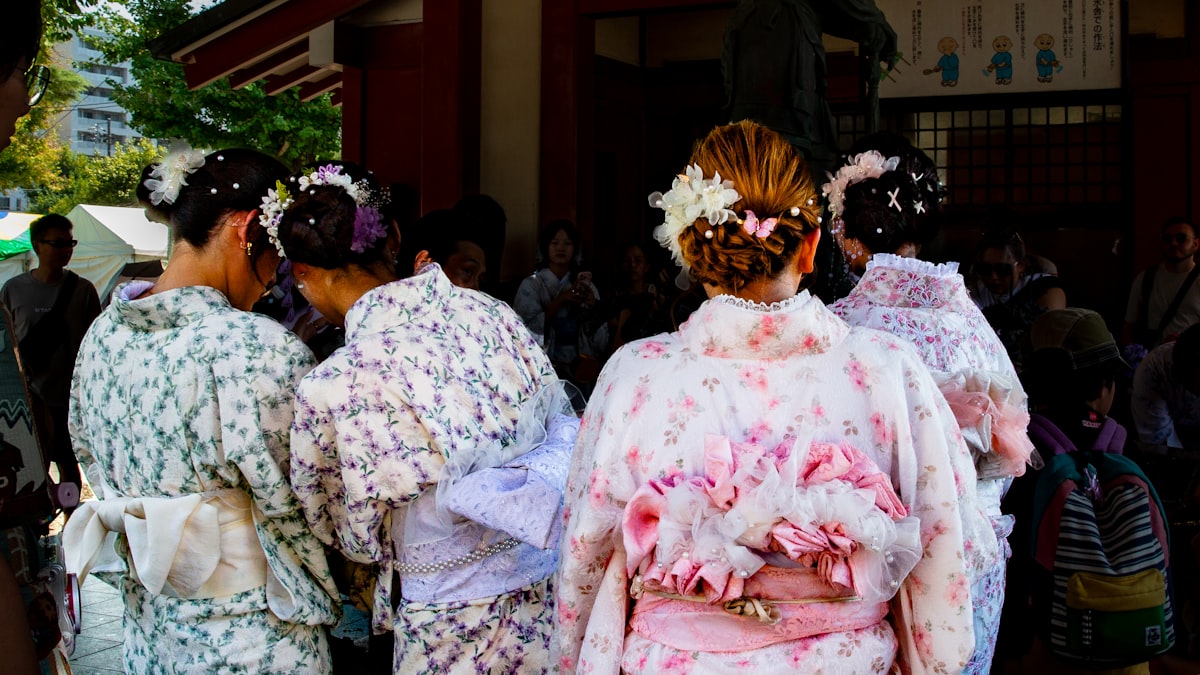
Photo by Rafik Wahba on Unsplash
Seasonal Kimono Guide: What to Wear in Each Season
Japanese kimono culture is deeply seasonal. Wearing the right fabric and motif for the season is a sign of refinement — here's your seasonal kimono rental Kyoto guide:
Spring (March–May)
Fabric: Hitoe (unlined) kimono in soft pastels — pink, lavender, mint green. Cherry blossom (sakura), peony, and butterfly motifs are classic. This is peak season, so book 2–3 weeks ahead.
Summer (June–August)
Fabric: Yukata (lightweight cotton) or ro (open-weave silk). Cool blues, whites, and indigo. Morning glory, goldfish, and water patterns. Kyoto summers are humid — yukata rental in Kyoto is far more comfortable than full kimono. Browse yukata plans →
Autumn (September–November)
Fabric: Awase (lined) kimono in deep, warm tones — burgundy, amber, forest green. Maple leaf (momiji), chrysanthemum, and autumn grass motifs. The contrast of a rich kimono against brilliant fall foliage is spectacular.
Winter (December–February)
Fabric: Awase kimono with added warmth layers. Dark, elegant colors — black, navy, deep plum. Pine, bamboo, plum blossom (shochikubai) motifs for the New Year season. Far fewer tourists, so you'll have the streets nearly to yourself.
Best Photo Spots for Your Kimono Shoot
You've invested in the rental — now capture it. Here are the photographer-tested best spots for kimono photos near Kiyomizu-dera and Gion:
- Sannenzaka Slope at 8:00 AM — Empty streets, soft morning light, wooden facades. The most iconic shot in Kyoto.
- Yasaka Pagoda (Hokan-ji) — The five-story pagoda framed by narrow streets. Golden hour (4:30–5:30 PM) is magical.
- Shirakawa Canal in Gion — Willow trees, stone bridges, running water. Less crowded than Hanamikoji. Start from Kanwa Gion →
- Kiyomizu-dera Main Hall — The wooden terrace at sunset, with all of Kyoto spreading below.
- Maruyama Park — The giant weeping cherry tree (spring) or maple grove (autumn). Natural framing for portraits.
Common Questions About Kyoto Kimono Rental
Q: Can I wear a kimono if I'm tall, plus-size, or have a non-Japanese body type?
Absolutely. Most Kyoto kimono rental shops now stock a wide range of sizes, including taller lengths (170cm+) and larger sizes. The dressing process uses padding and adjustable ties that work with any body shape. Mention your height or size when booking so the shop prepares appropriate options.
Q: How long can I keep the kimono?
Standard rental is a full day — typically 9:00 AM to 5:30 PM or 6:00 PM. Some shops offer "next day return" for an additional fee (usually ¥1,000–¥2,000), which is great if you want to experience an evening event in kimono. Always confirm the return time when booking.
Q: Is it difficult to walk in geta sandals?
It takes about 15 minutes to adjust. Geta are elevated wooden sandals that force a slightly different gait — shorter steps, straighter posture. Stick to paved or stone paths; avoid steep, uneven terrain. Many shops also offer zori (flatter, more modern sandals) if you prefer comfort over authenticity.
Q: What about bathroom breaks?
This is the #1 unspoken question! Yes, it's manageable — but requires technique. You lift the kimono layers carefully from the bottom, and the dressing actually has enough give. Pro tip: use the restroom before dressing, and again at temples or department stores (which tend to have spacious, clean facilities).
Q: Can men rent kimono too?
Yes! Men's kimono rental in Kyoto is increasingly popular. Men's kimono are simpler — fewer layers, no obi knot — and typically cost ¥5,500–¥9,900. Couple plans are a fantastic date activity and often include a mini photo session. View couple plans →
Q: Do I need to make a reservation?
Yes, strongly recommended. Walk-ins are possible on quiet weekdays but risky during peak seasons. A reservation guarantees your time slot, and many shops offer a small online booking discount. For cherry blossom season (late March–early April) and autumn foliage (November), book 2–3 weeks ahead.
Why Choose Kanwa Kimono for Your Kyoto Experience
With two locations — one steps from Kiyomizu-dera and another near Yasaka Shrine in Gion — Kanwa Kimono puts you directly in Kyoto's most photogenic districts. No buses, no taxi rides in restrictive kimono. Walk out the door and you're already there.
What sets Kanwa apart:
- From ¥3,300 — among the most affordable quality kimono rentals in Higashiyama
- Trilingual staff — English, Chinese (中文), and Japanese (日本語) support throughout the dressing process
- Two prime locations — Kiyomizu Store (清水店) and Yasaka Store (八坂店), both in the heart of Higashiyama
- All-inclusive pricing — kimono, obi, sandals, bag, and basic hair styling are included; no hidden fees
- Open all year — 9:00 AM to 5:00 PM, 365 days a year
- Multiple payment options — Cash, Visa, MasterCard, WeChat Pay, Alipay
Ready to Experience Kyoto in a Kimono?
Two locations in Higashiyama — Kiyomizu & Gion. From ¥3,300.
Book Your Kimono →

 Top
Top